


Performance Marketing focuses on measurable outcomes, where every dollar is tied to a concrete action. It turns campaigns into accountable investments with transparent goals, budgets, and timelines. It blends paid channels, data, and rapid testing to compound returns. Explore how Global Reach Marketing structures a performance marketing framework that scales without guesswork.
What is performance marketing in modern growth?
This section defines the mechanics behind results-driven advertising. We connect definitions to real business levers and explain why clarity on metrics beats hunches. You will see how incentives align across brands, platforms, and partners.
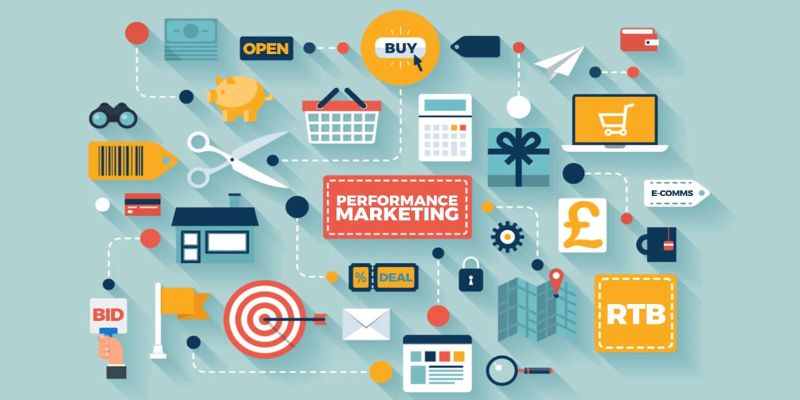
Define performance marketing within today’s growth landscape clearly
Definition and core value proposition
Performance Marketing is a results-first approach where advertisers pay when desired actions occur, such as clicks, leads, or sales. The model links spend directly to measurable outcomes, so risk shifts toward execution quality. It thrives on precise goals, disciplined tracking, and rapid iteration. Brands value its accountability, while finance teams appreciate consistent unit economics and predictable growth curves.
How it differs from traditional campaigns
Traditional advertising often optimizes for reach or awareness, which can be hard to quantify. Performance Marketing emphasizes attributable outcomes and ongoing optimization, not one-time flights. Campaigns run as experiments with clear hypotheses, control groups, and benchmarks. Results steer budgets in real time, so ineffective creatives, audiences, or bids get cut early, improving return on investment and pacing stability.
Common pricing models and incentives
Popular models include CPC for traffic, CPL for qualified leads, and CPA for conversions. Performance Marketing also uses revenue share and ROAS targets for ecommerce. Incentives align as partners are paid for outcomes, not impressions. This reduces waste, clarifies expectations, and promotes creative and landing page excellence. The best programs blend models, matching funnel stages with the most suitable metric.
Channels across the performance landscape
Paid search, paid social, programmatic, retail media, affiliates, and influencer partnerships are core channels. Performance Marketing can also include marketplaces, comparison engines, and native ads. Each channel adds a different demand signal and cost structure. Smart portfolios balance intent, scale, and cost per action while minimizing overlap and cannibalization across keyword groups, audiences, and placements.
Tracking, attribution, and data foundations
Reliable measurement underpins Performance Marketing. Teams implement server-side tracking, UTM rigor, conversion APIs, and consent-first analytics. Attribution blends first-party data, MMM, and incrementality testing to validate causality. With signal loss from privacy changes, modeled conversions and clean-room partnerships gain importance. Strong data pipelines ensure that budget decisions reflect true impact instead of vanity metrics or duplicated credit.
Planning and executing a performance strategy
Strategy translates objectives into channel choices, creative direction, and budgets. We outline the planning cadence that lets teams move fast without breaking measurement. The right guardrails let growth compound while risk stays contained.

Plan and execute a robust performance strategy effectively
Goal setting and unit economics
Start by translating business targets into channel-ready metrics. Performance Marketing plans should specify CPA ceilings, ROAS floors, and allowable payback windows. Tie these to contribution margin, not just top-line revenue. When goals connect to finance, you can scale winners confidently. This alignment is essential for executive trust, predictable forecasts, and smooth cross-functional planning cycles.
Audience and channel selection
Choose channels where customer intent is strong and addressable. Paid search captures declared intent, while paid social builds incremental demand. Performance Marketing portfolios often pair both for balanced growth. Layer first-party audiences to sharpen targeting and protect against signal loss. As you expand, consider affiliates and influencers for reach, but demand clear action metrics and brand-safe standards.
Creative systems and messaging
High-performing ads are clear, fast, and specific. Performance Marketing teams build modular creative systems with reusable hooks, value props, and proof. They ship variants weekly to beat fatigue. Messaging mirrors funnel stage, from problem framing to proof-rich offers. Video, statics, and UGC all play roles, but every asset needs a data-backed hypothesis and a crisp, testable call to value.
Landing pages and conversion design
Traffic quality collapses without conversion-centric pages. Performance Marketing relies on fast load times, social proof, and focused forms. Reduce friction with fewer fields, visible trust markers, and benefit-led copy. Align headlines to ad promises to maintain message match. Always test structure, order, and offer depth. Small lifts in CVR compound across channels, reducing CPA and enabling budget scale.
Measuring, optimizing, and scaling results
Great programs turn insights into compounding improvements. This section shows how to measure impact, isolate lift, and scale with confidence. Expect frameworks you can adapt to your stack and markets.
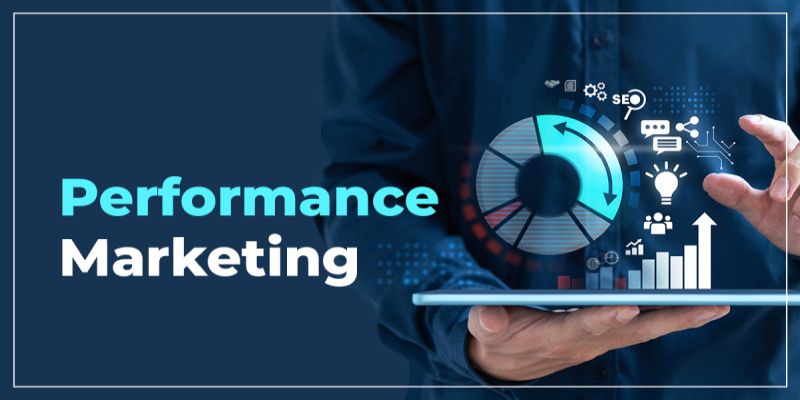
Measure, optimize, and scale outcomes for impact sustainably
North-star metrics and diagnostic layers
Pick one north-star metric that reflects value creation, such as qualified pipeline or profit-adjusted revenue. Performance Marketing adds diagnostic layers like CTR, CVR, CPA, and LTV to reveal bottlenecks. Dashboards should separate leading from lagging indicators. When teams agree on definitions and time windows, debates shift from opinions to evidence, which sharpens decisions and accelerates iteration speed.
Attribution, incrementality, and MMM
Single-touch models oversimplify reality. Blend last-click clarity with geo and audience holdouts to estimate lift. Performance Marketing also benefits from media mix modeling to guide budget shares. Use triangulation: compare model outputs against experiments and business reality. When methods agree, confidence rises, which lets you shift spend faster and defend decisions with finance under scrutiny.
Experiment design and test hygiene
Write hypotheses that link a lever to an outcome with a specific audience and timeframe. Performance Marketing tests need guardrails for spend, overlap, and sample size. Track pre-test baselines and record all changes. Kill underperformers quickly and bank learnings in a shared library. Over time, this muscle forms an institutional memory that prevents repeat mistakes and speeds creative breakthroughs.
Automation, bidding, and budget pacing
Lean on platform automation but feed it with clean signals and strong creative. Performance Marketing teams use value-based bidding, broad match with negatives, and structured tests. Monitor learning phases, daily pacing, and seasonality. Push budgets on proven ad sets to avoid restart penalties. A tight feedback loop between analytics and buying prevents drift from unit economics and protects margin.
Conclusion
Performance Marketing gives leaders a controllable growth engine, where spend follows proof and decisions follow data. It aligns creative craft with financial discipline, so every test compounds your advantage. With robust tracking, agile sprints, and clear unit economics, small wins stack into durable scale. For tailored roadmaps, connect with Global Reach Marketing through our strategy discovery channel.