


Landing Page is a focused web page built to convert a defined audience. It trims distractions, tests messages, and guides visitors to one measurable goal. This guide explains types, structure, UX principles, and analytics that matter for growth. See how Global Reach Marketing applies these pillars in our landing page services.
Defining the value of a landing page
Every campaign deserves a page built for one job. A strong Landing Page aligns offer, audience, and analytics to concentrate impact. The following fundamentals clarify value and give you a checklist you can revisit in our best-practice examples.
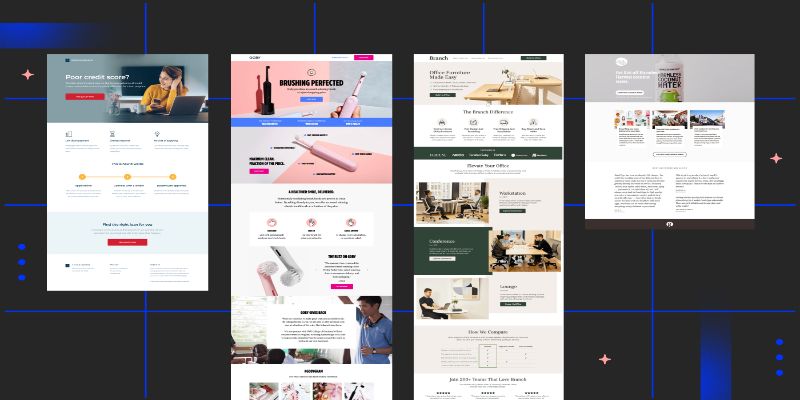
Clarify a landing page’s value proposition for conversions
What sets a landing page apart from a homepage
A homepage introduces a brand and routes people to many places. A landing page exists for one campaign, one audience, and one action. It removes navigation, prioritizes message match, and sequences proof to reduce doubt. This tight focus shortens decisions, lifts relevance scores, and improves paid media efficiency for Global Reach Marketing clients across channels and devices with clarity throughout.
Core types: lead gen, click-through, and product
Most teams use three core models. Lead generation pages trade value, like guides or demos, for verified contact details. Click-through pages warm intent before sending visitors into carts or app stores. Product pages present a single SKU with focused proof. Choosing the right model ensures your Landing Page aligns to funnel stage, traffic quality, and cost per acquisition and risk.
Message match across ad, headline, and hero
Visitors click because a promise caught attention. Message match repeats that promise in the headline, hero, and primary call to action. Keep keywords, visuals, and value identical to the ad or email. This removes cognitive load and bounce. A consistent page improves Quality Score, lowers CPC, and increases intent carryover from every channel while protecting continuity across multi-touch journeys today.
Above-the-fold anatomy that earns attention
What appears first shapes outcomes. Place a clear headline, supportive subhead, primary button, and a trust cue above the fold. Use a visual that demonstrates outcome, not features. Trim competing links. Keep layout clean and fast. A strong above-the-fold block lets your Landing Page communicate value in seconds, before attention shifts or media budgets waste through avoidable friction and clutter.
Trust elements that reduce risk and hesitation
Trust accelerates commitment. Combine recognizable logos, short testimonials, third-party badges, and clear policies near the primary call to action. Use specific numbers and names where available. Avoid vague claims. Showcase customer outcomes that mirror the audience. A credible page offsets uncertainty, strengthens social proof, and supports compliance, especially in finance, healthcare, and B2B software categories where stakes feel higher today.
Designing journeys that turn interest into action
Design translates strategy into behavior. When structure, copy, and visuals remove friction, more visitors progress with confidence. Use this section with our UX checklist for landing pages to build consistently high-performing experiences.
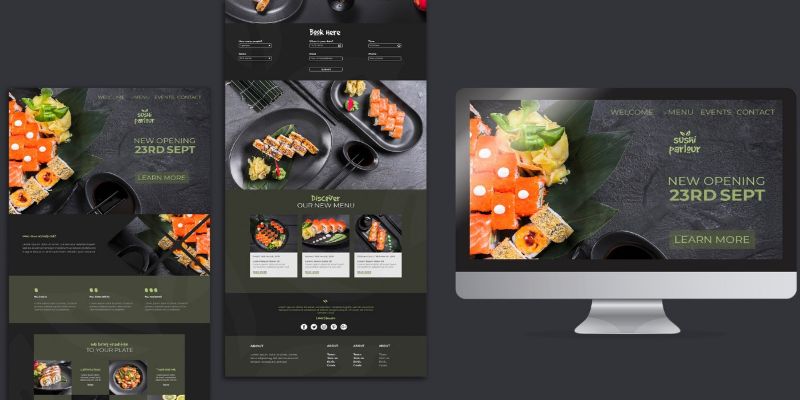
Design journeys that convert curiosity into decisive action
Crafting benefit-led headlines and subheads
Clarity beats cleverness when stakes are high. Write headlines that promise an outcome, not features, and back them with a concise, supportive subhead. Use the language your audience uses in search and sales calls. Avoid empty adjectives. In testing, benefit-led lines help your page align with intent, improve scanability, and set context for proof that follows below the fold nicely.
Structuring scannable sections and microcopy
People skim before they read. Break content into short, labeled sections with descriptive subheads, bullets, and pull quotes. Use microcopy near fields and buttons to answer silent questions. Keep paragraphs tight. Add visual variety without distraction. A well-structured Landing Page improves comprehension, builds momentum through the page, and supports accessibility for diverse users and goals across devices, situations, and teams.
Forms, fields, and progressive profiling
Every field adds friction. Ask only what you need now, then enrich profiles later through progressive steps. Use smart defaults, inline validation, and helpful examples. Explain why you ask for data, and link to privacy. Test short versus multistep flows. The best Landing Page balances conversion rates with lead quality, routing, and sales follow-up speed to protect trust and consent.
Speed, mobile patterns, and accessibility
Speed is a feature, not an afterthought. Compress media, preload critical assets, and defer nonessential scripts. Design thumb-friendly buttons and sticky calls to action on small screens. Respect color contrast and readable type. Test with screen readers and keyboard navigation. A fast, inclusive Landing Page preserves ad spend, lifts SEO, and serves customers with dignity across contexts and connection speeds.
Measuring, testing, and scaling performance
What you measure shapes what you improve. Treat experiments as a product, with rituals and clear owners. The practices below pair well with our A/B testing plan to scale results responsibly.
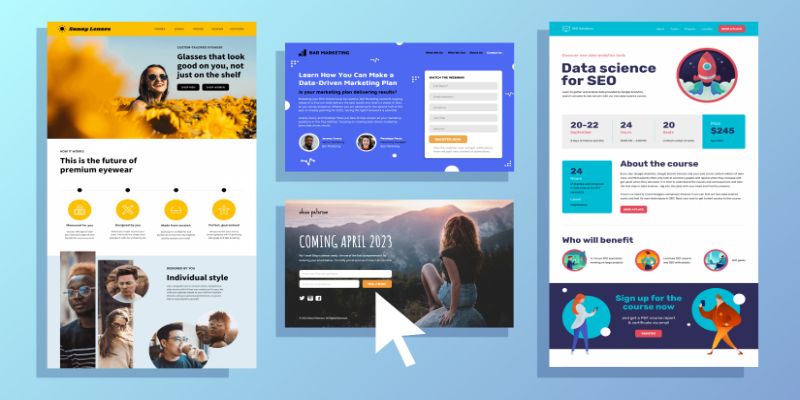
Measure, test, and scale performance across initiatives effectively
Setting up tracking, events, and utm discipline
Measure cleanly or fly blind. Implement analytics, pixels, and server-side events with a documented schema. Name events consistently and include revenue where relevant. Standardize UTMs across channels for source, medium, campaign, and content. Validate every path. With reliable data, each page reveals acquisition efficiency, creative impact, and drop-offs that deserve design fixes or experiments before scaling spend and traffic significantly.
A/b testing cadence and learning agenda
Testing is a process, not a slot machine. Prioritize hypotheses from highest potential and confidence to lowest. Test single variables when traffic allows, and cluster themes when it does not. Record setups, outcomes, and decisions in a shared log. A disciplined Landing Page cadence converts results into knowledge, preventing repeats and guiding bigger, faster wins as budgets and audiences evolve.
Personalization, segments, and intent signals
Not every visitor needs the same proof. Tailor headlines, modules, and offers based on intent level, segment, or lifecycle stage. Use source, behavior, and location to infer needs while respecting privacy. Start simple with dynamic blocks. Over time, a modular page adapts to patterns, increases relevance, and protects speed through content governance and templates that scale without developer bottlenecks entanglements.
Integrating crm, ads, and marketing automation
Connections make insights useful. Sync forms to your CRM and marketing automation with hidden fields for source and campaign. Trigger nurturing based on events, not only time. Pass audiences and conversions back to ad platforms using the correct parameters. A well-wired page closes the loop, improves budgets, and accelerates feedback between creative, media,
Conclusion
Landing Page turns attention into outcomes by aligning message, design, and measurement. Treat it as a living asset that learns with every visitor. With Global Reach Marketing, your campaigns gain a repeatable system for growth. For deeper insight, explore our library of landing page examples and apply the patterns that fit your funnel.